Showing posts with label fall garden. Show all posts

Thursday, January 23, 2014

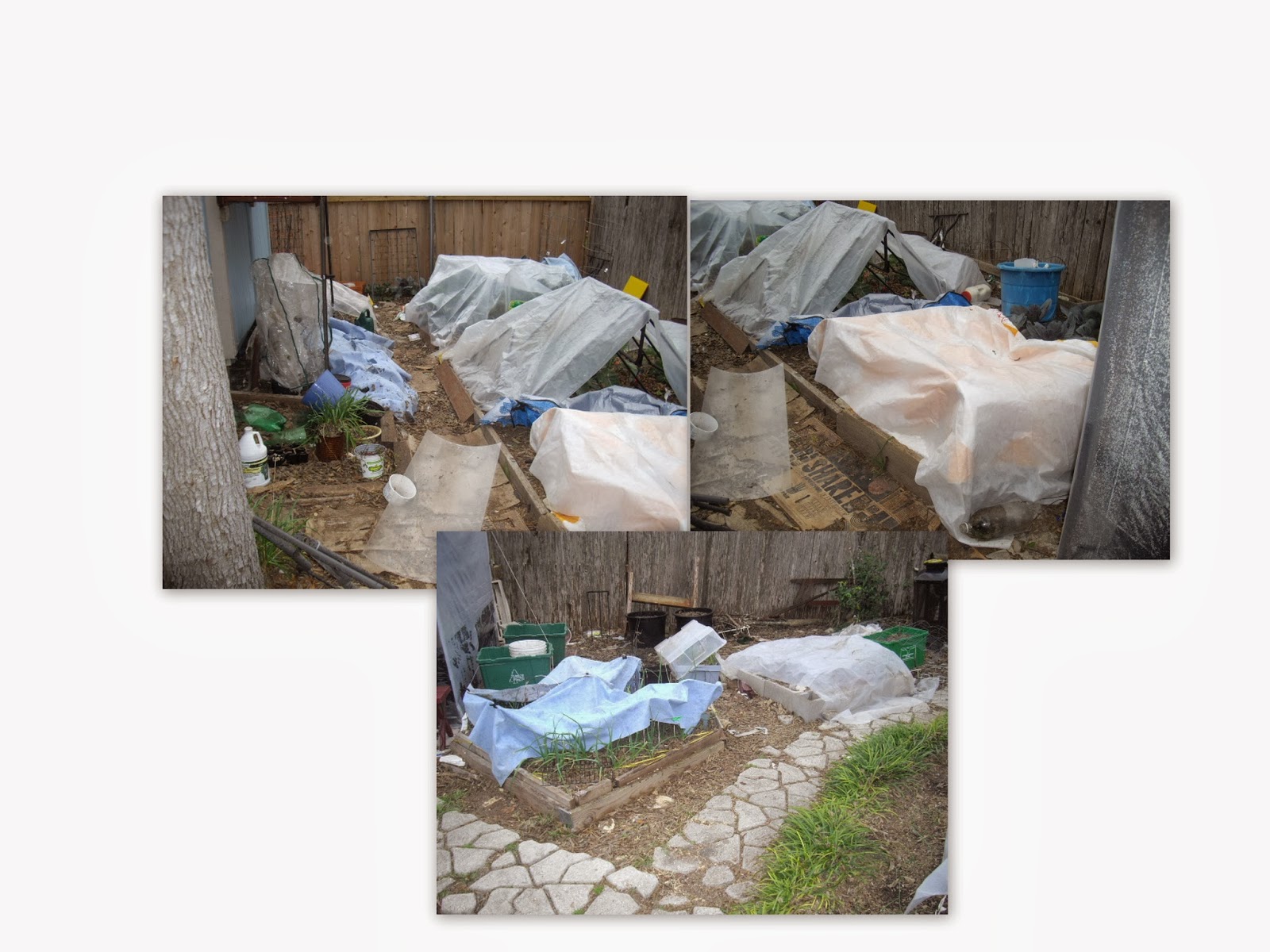
Surviving the freezing weather one blanket at a time

 This has been a really hard cold winter here in central Texas. For the second time in a month our temperatures will fall into the low 20s. I have been out covering up the plants that are supposed to tolerate a little bit of frost. Cauliflower unfortunately does not like to be frozen and apparently neither does arugula. As you can see from one of the pictures the plants did live through the phrase but they sure look battered. It also slowed down the production of the broccoli that was just starting to make nice heads. The cauliflower has been really stunted and I lost two of the cheddar hollow flower


Monday, November 11, 2013

Harvesting sweet potatoes, kohl rabi and more

Last  spring some of the sweet potatoes I had purchased near Thanksgiving and began to sprout.I investigated how to produce sweet potato slips from them and successfully came up with about 12 slips. Digging into the bed behind my shed and readying it for the slips was the easiest part. Not much grows in the summer heat and I was pretty busy with camp anyway. The vines got really rangy and in August I snipped some and shoved them into a pot just for greens. I should have used a bigger pot as when I pulled the soil out it was full of little fingerling potatoes.Last
With a frost predicted this week I began harvesting my sweet potatoes. I decided to use my weed weasel in hopes that I would not damage the potatoes. Great choice! The harvest was not bad, about 3 gallon jugs but I probably would have had more if I had known to cut my vines and either harvest the leaves or just have more individual plants. As it is I put up three bags of leaves for creaming and probably will have another two or three bags this week as I complete the harvest.

Some of the kohl rabi from last year didn't make any  rabes or bulbs but because the leaves are so tasty I left six or seven of them in the garden. After all of the heavy rains during the last month, imagine my surprise that they're making rabes or bulbs. With the cold weather I have pulled the last of the okra plants and am still harvesting A handful of green beans that survived the bugs. It is still nice to have a variety of fresh vegetables right from the yard. We still have several eggplant in the garden that are full of blooms and baby eggplants as well as green peppers that probably will need to be covered with plastic to survive these cool fronts.

Monday, January 7, 2013

Winter garden presents challenges

This falls garden has presented a number of challenges. The infestation of whiteflies and other insects I had in the front yard garden has carried over onto many of the fall garden plants. I have pulled out all of the infested plants throwing away many eggplants and squash plants. Faithfully using fish emulsion on the suggestion of green and growing and the sustainable harvest people I have managed to have plants that are once more thriving except for the beets. They are being particularly hard hit by something that's eating holes in their leaves but I don't want to risk putting too much nitrogen on them and causing them to not make adequate sized beets. I have also found a number of very large cut worms in the soil which were doing significant damage to my bean plants and others. I have dug them out and smash them in hopes of reducing their population. At least we have had several flight freezes in late December and early January.

We were able to get the greenhouse repositioned and covered with its plastic in plenty of time for the cold weather. In fact as soon as we had it ready the weather was not cold for several weeks again. The plants seem to be thriving in there with the extra humidity and heat. I have about six different kinds of pepper plants in the greenhouse and all of them have numerous peppers on them. This morning I noticed almost 20 small tomatoes on the four tomato plants and one more eggplant. I have a shelf mounted on the side to nurture small plants before I transplant them to the garden.

I use the tops of several 2 L bottles to make cloches for my broccoli and brussels sprouts transplants and these  seem to have caused them to grow better. Experimenting with the tops and the middles of the 2 L bottles leads me to believe that the tops that are closed with just a small hole work better then a 4 inch tall surround from the middle of the bottle. Now I wonder if using the bottom that is totally closed over the plants will also work well. However I will use whatever I can use so that the plants are protected from all the wind we have had.

The garlic and the onion sets that I planted are  growing well this year. I did get to mulch them with about an inch of leaves just before the freezes to keep the moisture into the ground. I think that only two or three of all the garlic bulbs I planted failed to germinate. We've been stealing a bit of the tops and they taste wonderful. I can hardly wait till this summer when we harvest them to have much superior garlic to what we've had in the past.


Monday, October 1, 2012

Gardener's TO-Do list for October


From Organic Living

Our zone-by-zone list will keep you busy this month.

plant a wildflower meadowZone 8
  • Plant more lettuce, Chinese cabbage, spinach, carrots, beets, peas, radishes, onions, turnips, garlic, shallots, and cress.
  • Set out strawberry plants.
  • Sow a cover crop of winter rye (Secale cereale), purple vetch (Vicia benghalensis), Austrian winter peas (Pisum arvense), or ‘Elbon' rye (Secale cereale ‘Elbon') in vacant beds.
  • Use rye clippings to add nitrogen to compost, speeding the breakdown of fall leaves.
  • In flowerbeds, plant anemones, oxalis, and ranunculus for spring bloom.
  • Also, seed annual candytuft (Iberis umbellata) in bare spots of flowerbeds for spring bloom.
  • Broadcast wildflower seeds to establish a meadow.
  • Plant trees and shrubs: Warm fall temps will help them get established before winter.
For more zones or to look at other articles: organicgardening.com

Sunday, September 23, 2012

Fall gardening into full swing with brassicas and root crops

I couldn't wait for fall so I could replace the under-performing plants that lived through the heat with the broccoli, cauliflower, cabbage and beets/carrots that we seem to be able to grow in great profusion. I started all of the plants except cabbage from seed and am spending time fine tuning the soil with my little test kit and transplanting the little seedlings into the garden. I am also looking closely at companion plantings. The cool mornings are enticing me from many other tasks but the rewards are going to be many.

I found an interesting lettuce tower on Pinterest and got it made up with a few sprigs of red sails lettuce. should be fun if nothing else. I am trying fall green beans and peas to see if they do better. Seems that last fall the green beans did pretty well. I have a new really short season variety to try. 

The herbs are going strong compelling me to find recipes to utilize all of them. Sage stuffed pork roast was terrific, the Thai basil and garlic parsley butters are great on bread, potatoes, rice --the list goes on and on. I have  dozens of packets pesto in the freezer waiting to be  spread on pasta, bread, crackers and more. The lemon basil has appeared on chicken and on a zucchini torte.  George is using a lot more mint in his tea too. I haven't tried out rosemary dishes but will go there next. Garlic cloves are on their way from the grower so next year we should have really tasty garlic to use too. 

I participated in a few plant swaps in the last few weeks and have added a number of perennials to the beds and bringing in new color and textures. I got half a dozen coleus plants of various leaf types and rooted most of them to double or triple the plantings. Looks pretty good out there even with all the heat.

Sunday, September 16, 2012

Tim wows the garden guild with fall prep and planting information


 The room was full and Tim Pfluger ( Green 'n Growing) was in high gear talking about how to get a new or old garden ready for planting and what plants and seeds to put into in in the fall. He talked about out clay soils and how to amend them using a variety of organic products which he whipped out of his bag to show us so everyone could examine them and ask about them. He says he starts with a good application of compost (about 1 cu.ft/ 12 sq. ft of garden--double for new beds) each time and mixes in  a bit of green sand which provides iron for the plants and some of the rock phosphate or alpha meal, then spreads this over the area he is planting and digs it in with a garden fork. He says the alpha meal is a natural growth stimulator. He also may add dried molasses to stimulate the micro-organisms in the compost. 


For seed starting he showed up a product to add that stimulates growth called mycorrhizal Fungi (at right) apparently does not need a lot to get things going. 

He also showed a couple of products to use once the plants are established that aid bloom and fruit production pictures below. Both contain a mixture of minerals and other nutrients. Each is a different blend and can be used as a side dressing about once a month.   He also mentioned Lady Bug flower power. Questions were asked about MG and the nitrogen content is way to high to promote fruiting but green growth is enhanced. 


 Tim referred us to the county extension chart for planting and discussed serial plantings so that not all the production is at one time. It is too late to see the brassicas but not to put in transplants. Great time for seeding lots of vegetable that will take a light frost or be ready to harvest within 60 days. Good time for lettuce, spinach, carrots, beets, radish, kale, chard, bush beans, snap peas and even summer squash.  Onion sets get planted in November for harvest in last spring.  It was a great meeting and good information. 

Our first seed/plant exchange had lots of items switching hands. 

Thursday, September 13, 2012

Tim Pfluger to discuss planting the fall garden and soil amendments 9/15


If you don't think you have a Green Thumb, this is the meeting for you.

Tim Pfluger of Green and Growing will teach us about how to plant the Fall/Winter Garden, including proper soils, compost, fertilizers and amendments for growing vegetables, flowers and other plants during the Garden Guild Meeting Saturday, Sept. 15.  11:00 AM at the Recreation Center on 3000 Shoreline.  

This is the most important basic knowledge for growing plants.  Come get your questions answered.

Also (Extra, Extra), new feature of the Garden Guild, come at 10:30 AM (before the meeting) with plants/seeds to share or food to share a bit of a chat before the meeting. "

Friday, August 17, 2012

Hot, Hot, Hot and still growing

Although the drought is not as severe as last year, the lack of regular rain and excessive heat do take a toll on the plants. I have been trying to soak them every 2-3 days and give them a drink with the watering can if they are too droopy between times but it just has not been enough to keep the okra and eggplant producing. So this week a bit more water and they have really responded even at 100 degrees. I think that the neighbor's tree sucks up so much of the water--there are surface roots that might have to be severed.

I took a chance and planted some black eyed pea seeds that a neighbor gave me and now am almost ready to pick some. The Malabar spinach is thriving and the herbs are doing really well under the oak tree. Chard it still going but is now ornamental as it is just too bitter to use. The purple beans are blooming and setting tiny beans and doing nothing more. I was hoping to have beans longer than 1" for eating, oh well. 

The peppers in the greenhouse have been giving us a steady handful of peppers. Nothing to shout about but then beats none at all. The ones in the back garden have lots of buds but no fruit yet--tree roots again pulling  the water.

I am investigating ways to construct beds that will keep the roots out but let the plants have the depth they need. I also started seeding for fall and have broccoli and cauliflower in grow trays as well as chard and beets. Looking forward to more of the fall stuff soon. 

Friday, December 2, 2011

Construction of Greenhouse no small task

With the weather being a bit more favorable this fall the tomatoes and peppers were setting like crazy but not quite ready to pick. I put them into much larger containers which probably helped with their growth but presented a real problem moving them into the sunroom area for the winter. many were very heavy and there would be no space for seed starting. So off we went to Lowe's for 6 mil plastic sheeting and to the garage for scrap wood. We managed to make the entire 6'x7' structure with what we had on hand or could re-cut. I even made a door out of the old sliding door we do not use any more. I didn't move the water barrel out as it is full with 55 gallons and should help keep the temperature a bit more stable this winter.
 It heats up pretty good radiently which may be a problem on warmer days (not many scheduled any time soon!) but isn't keeping much over ambient by the end of the night. I pulled the oil radient heater and the red Xmas lights out of the sunroom and was able to keep the greenhouse about 10 degrees over ambient at 40-42 so we'll see how it does. I have put in more buffer (cardboard) around the pots too. My reading says to add bubble packing wrap to trap more heat from sunlight but not sure how much it retains over night. 
We did get the frames for the last 2 rainbarrels built and installed last week too. They are now full too. George is building lattice type screens for them as the blue is not as attractive as we would like along the front walk.


Friday, November 11, 2011

Fall gardening expansion and peppers

Following our plan to convert more of the front lawn to gardens, I tilled up a section about 10' wide and 27' long next to the existing bed and am using it for the cabbage, cauliflower, spinach, chard, and kohl rabi. I bought more of the purple cabbage that did so well in the spring and had to buy broccoli as well when the critters dug up all the ones I grew from seed. I was able to grow my own cauliflower and have added kohl rabi to the front and back gardens. I remember liking it as a kid and it is supposed to be a great fall crop. It will also look very interesting in the front garden.
The peppers are finally setting fruit and ripening now that we have had a bit of rain and cool weather. Even the habeneros are setting and ripening although not as well as I had hoped. We will grow enough cherry peppers to can, maybe enough jalepenos and anaheims but will be saddly short on green peppers which we use a lot of. The 2 celebrity tomatoes I bought in August are full of fruit and hopefully will begin to ripen soon. They are set up with plastic for covers if the nights get a bit chilly until they have to go to the green house. Eggplant are full of blossoms and little fruit so we get enough for dinner every 4-5 days or so. The okra is still trying but I am ready to pull it and plant 3 times as much next spring.
I planted a fall crop of green beans in August and am getting a couple of meals a week from them too. They did poorly in the spring but are doing quite well now. I am even getting a few cucumbers which are about the best I have ever tasted. I think everything is liking the rainwater. Now if it will hold out a while and rain a bit every week or so.
Posted by Picasa

Sunday, October 31, 2010

Cultivation by squirrel and other oddities


 The other morning I went out to the garden and found about a dozen little holes around the plants but didn't seem to be trying to dig up the plants. Judging from the squirrels I see on the fence and tree branches, I think they are my unwanted helpers. I am sure they are burying things I do not need in my garden. I replanted the broccoli and cauliflower they unearthed and find they do not like wetter soil so are leaving most things alone now--or they have buried all their nuts!
 I spent some time this morning transplanting lettuce and bok choy. Hoping for a bumper harvest of both over the winter. I have quite a few red ruffled leaf coming along and the remaining broccoli and cauliflower are doing well. The spinach that I planted in 2L bottle collars is also thriving--not like the plants this spring. maybe that is the key--get them big enough so the little bugs leave them alone. Carrots are doing well in their tubs so should have some to move around and harvest next spring.


I am also beginning to move some of the peppers and tomatoes into tubs to move into the "greenhouse" and extend their growing season should we have cold snaps at night. A couple are against the shed where they will get more warmth and 3 are already inside. We'll see what works best over the next couple of months. Last year putting all the plants so close together inside created a bug problem that I had trouble solving. 

Sunday, October 3, 2010

Fall Crops to Grow

A gardening friend in OK posted this to the list serve and I am sharing her very good information. 

So what kind of crops can you grow in your garden? Oh boy, lots of good stuff! There are different varieties of crops you can grow. And you have to consider which ones will work for you based on your tastes, and the timing of your first frost (11/5 here in Austin.) There are cool-weather crops, and cold-weather crops. 

Cold-hardy vegetables include the following (maturity is in parenthesis): These guys survive some frost and can be found as transplants around the area now. 
Brussels sprouts (90 days)                                                               Cabbage (70 days)
Collards (75 days)                                                                                Kale (55 days)
Parsnips (100-130 days)                                                                   Spinach (45 days)
Garlic (best planted when winter is really close)


Cool-weather hardy vegetables include:
Lettuce (45-60 days, depending on variety)  seed them directly, transplant them, or seed them into flats
Mustard greens (45 days)                                                               Radishes (25-50 days)
Rutabaga (90 days)                                                                           Snap peas (50-60 days)
Turnips (60 days)                                                                              Carrots (50-70 days, depending on variety)
Broccoli (70 days)                                                                            Cauliflower (60 days)
Green onions (50-60 days)                                                           Beets (55-60 days)
Swiss chard (30-50 days)


From this list, I know that I am going to be erecting a couple of cold frames to keep tender lettuce and such from freezing but it made it last year through 2 snows so I know it will work.  I have the PVC and need a couple more connectors to do it better than before.  I also am using the bed next to the shed which gets more light and is an easier area to build the cold frame over. 


I start all my seeds on the bathroom windowsill in flats. It has great early morning sun, lots of light most of the day (I have them sitting on a mirror to add more light) and I keep a better eye on them until they are up and going. It is cooler than the yard in the summer and works well until it gets really cold. Some plants, like various cabbages and salad greens, simply won't grow if the soil is warmer than 85 degrees. The plants move to the picnic table from the windowsill with dappled light but more sun, then to the garden when they are past their second leaf.    

She says the key to successful fall planting is to get the plants growing to catch the last wave of summer heat AND allow them to mature before the first frost hits. You also have to keep seedlings moist; drought stresses young plants, especially fall veggies, so it's important they not dry out. 

Where to Plant  More than anything pay attention to plants that do not like to follow each other. Fall is no time to stunt their growth. Planting broccoli and other brassicas in the same place season after season here encourages bugs so I am trying out a pyrethrum powder to combat the cabbage worms that already found the chard.  It seems a lot safer than the sevin dust I tried in the spring out of desperation.


I am mulching with a combination of grass clippings and shredded office paper. We have such a small yard now that I never have enough clippings. I am also still adding 1/4 volume of vermiculite to every area I prepare to help retain the moisture in the soil in addition to mulching.


Lastly, the tender crops  Most of the peppers are already in large pots and all the new cherry tomatoes are. This makes it so easy to just whisk them into the sunroom when temperatures get too low. I even got new bulbs for the grow-light.