What makes plants easy to grow? Is it that the seeds come up easily? Is it that the plants thrive once they are up and produce? Is it that they do not require a lot of tending? A lot depends on the gardener in this case.
 One of the things that makes plants easier to grow takes a little work up front. Especially during times of drought and heat it is essential that the garden have adequate mulch around the plants. This serves to keep their roots cooler and to retain moisture in the soil. It is also beneficial to establish a soaking program for the plants so that they develop deeper roots and are less
 dependent on frequent watering. Some plants however do not have deep roots systems, it is not their culture. This includes peas and beans and many of the cole crops like broccoli and cauliflower. Many leafy plants can be grown in the heat of the summer like lettuces if they are grown in a much shadier location where they only get 2 to 3 hours of sunshine per day. Plants that have smaller leaves also tolerate drought better as do plants that have fleshier leaves or hard stems. You may want to choose plants with shorter days to harvest in the spring to assure a better chance of picking before it gets hot>> VegetableVarietiesTravisCounty It is a good plan to place the plants with the same water requirements in the same areas of the garden. If you put your plants in pots, you may want to avoid clay pots that are not glazed in favor of the glazed and plastic pots. Darker colored plastic pots may overheat service of your plants in the summer causing them to die. Best to use lighter colored or to cover the outside of the pot with a wrap to not cook the roots.
When you consider what plants to grow in a vegetable garden for spring and summer most years we need to plant plants that we can harvest the fruits before July. The easiest plants that can be planted very early in the spring February through April are of course the lettuces, some greens like kale, peas, root crops like beets, radishes, spring onions, and carrots, and several types of beans. We are still able to transplant broccoli through mid-March but it frequently will draw diseases to the garden.


Landscape plants for the garden should be selected from the list of Texas natives when at all possible. Most of these are perennials and unfortunately during their first year Will require much more water and in subsequent years. Gardeners get the idea that they want A blooming English garden but our climate just doesn't support those kinds of plants very well. It is possible even in a drought tolerant Garden to have blooms from spring through late fall if you pick the right plants and put plenty of mulch around them. They are finding that plants from the nursery that are grown and squarish containers transplant better because their roots don't get all wound around and will spread out better in the garden.
links:
https://aggie-horticulture.tamu.edu/publications/veg_variety/select.php Recommended Vegetable Varieties for Travis County
http://aggie-horticulture.tamu.edu/fruit-nut/ Fruit and Nut Fact Sheets
http://horttest.tamu.edu/travis/files/2012/11/VegetableVarietiesTravisCounty2013.pdf Vegetable Varieties for Central Texas—Great list
http://www.attainable-sustainable.net/growing-food-drought/
http://www.richsoil.com/hugelkultur/
http://www.rareseeds.com/search/?F_Keyword=drought Seed source
http://www.southernexposure.com/blog/2012/02/what-to-grow-through-very-hot-summers/ seed source
http://www.tomatodirt.com/tomatoes-for-hot-dry-climates.html seed source
http://www.swallowtailgardenseeds.com/vegetablesaz.html#gsc.tab=0 has lots of hot weather seeds—got my summer lettuce here
https://www.austintexas.gov/sites/default/files/files/Watershed/growgreen/plantguide.pdf
http://austinnativelandscaping.com/xeriscape-texas-native-plants-for-drought-toleran-landscaping-in-austin-texas/ nice list of plants with interactive features
http://www.wildflower.org/collections/collection.php?collection=centex_drought
http://valleycresttakeson.com/watermanagement/resources/top-5-drought-tolerant-plant-resources/
http://aggie-horticulture.tamu.edu/organic/files/2011/03/E-512_mulching.pdf great discussion on types
http://alternative-energy-gardning.blogspot.com/2013/05/shade-tolerant-vegetables.html shade tolerant veggies
http://www.ivillage.com/best-plants-attract-butterflies-your-garden/7-a-535056?ivNPA=1&sky=stu%7Civl%7Chh%7Cbutterflies%7C%2F plants to attract butterflies


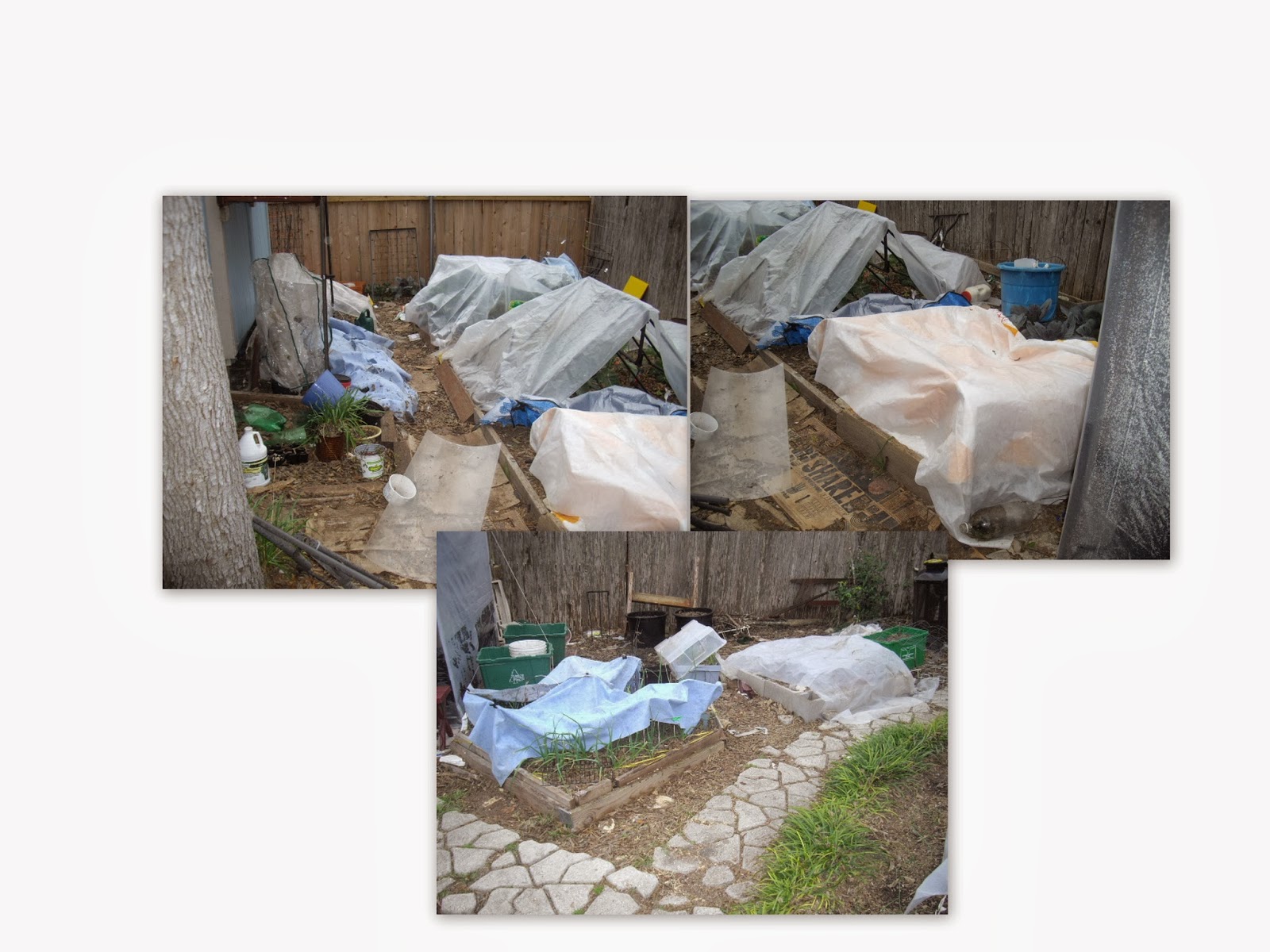 This has been a really hard cold winter here in central Texas. For the second time in a month our temperatures will fall into the low 20s. I have been out covering up the plants that are supposed to tolerate a little bit of frost. Cauliflower unfortunately does not like to be frozen and apparently neither does arugula. As you can see from one of the pictures the plants did live through the phrase but they sure look battered. It also slowed down the production of the broccoli that was just starting to make nice heads. The cauliflower has been really stunted and I lost two of the cheddar hollow flower
 Last spring some of the sweet potatoes I had purchased near Thanksgiving and began to sprout.I investigated how to produce sweet potato slips from them and successfully came up with about 12 slips. Digging into the bed behind my shed and readying it for the slips was the easiest part. Not much grows in the summer heat and I was pretty busy with camp anyway. The vines got really rangy and in August I snipped some and shoved them into a pot just for greens. I should have used a bigger pot as when I pulled the soil out it was full of little fingerling potatoes.Last